
Let's tackle global warming — together
The science is clear, the stakes are high, and the solutions are within reach — but meeting this challenge takes effort from everyone: individuals, communities, businesses, and governments. This site breaks down what's driving the crisis, who is most affected, and what each of us can do about it.
- warmer than pre-industrial averages
- 1.2+ °C
- warmer than pre-industrial averages
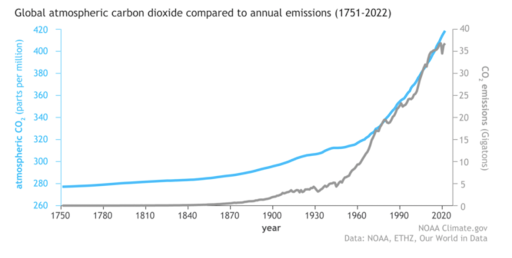
- atmospheric CO₂ — the highest in at least 800,000 years
- 420+ ppm
- atmospheric CO₂ — the highest in at least 800,000 years
- of climate scientists agree: the warming is human-caused
- 97%
- of climate scientists agree: the warming is human-caused
What are the causes of global warming?
Climate change is not caused by a single factor. It is the result of a mix of human activities and natural forces — but the two do not play equal parts. A substantial majority — 97% — of climate experts agree that the rapid warming of the last century has been driven mostly by human activities. Here is a breakdown of the main contributors, both human and natural.
Human activities
Most of the following sources come from how we produce energy, grow food, and make and move things. Together, they have more than doubled the concentration of carbon dioxide in the atmosphere since the industrial era began.
Burning coal, oil, and natural gas for electricity and heat is the single largest source of greenhouse gas emissions. Shifting to renewable sources like wind and solar dramatically reduces those emissions.
How we live matters. Household energy use, transportation choices, what we eat, and what we buy all carry a carbon footprint — and collectively, consumer demand drives a large share of global emissions.
Industrial processes — from cement and steel production to chemicals and plastics — rely heavily on fossil fuels, making manufacturing one of the largest sources of greenhouse gas emissions.
Deforestation releases the carbon stored in trees and removes one of nature's most important carbon sinks, accounting for roughly 10–15% of global emissions.
Cars, trucks, ships, and airplanes burn fossil fuels to move people and goods. Road vehicles alone are the largest single source of transport emissions.
Agriculture, livestock, fertilizer use, and land-use change release both carbon dioxide and methane, making the food system a significant driver of climate change.
Residential and commercial buildings rely heavily on fossil fuels for heating, cooling, and electricity — a major and growing share of total energy use.
Space and water heating, air conditioning, and refrigeration are among the fastest-growing sources of energy demand worldwide, and most still run on fossil fuels or refrigerants that are themselves potent greenhouse gases.
As food scraps, paper, and organic waste decompose in landfills they release methane — a greenhouse gas over 80 times more warming than CO₂ over a 20-year span. Cutting and capturing these emissions is a fast-acting climate lever.
Natural factors
Earth's climate has changed naturally for millions of years, shaped by the Sun, the oceans, volcanoes, and slow shifts in the planet's orbit. These factors are real — some are slow background forces, others redistribute heat or cause short-lived cooling spikes — but none of them can account for the rapid, sustained warming observed over the last century.
Variations in the Sun's energy output have influenced Earth's temperature in the past. However, satellite measurements over recent decades show no significant change in solar irradiance that could explain today's warming.
Slow shifts in Earth's orbit — known as Milankovitch cycles — drive long-term climate patterns such as ice ages. They operate over tens of thousands of years and do not explain the rapid warming of the last century.
Major eruptions inject sulfate aerosols into the upper atmosphere, reflecting sunlight and cooling the planet for a year or two — Mount Pinatubo cooled Earth by roughly 0.5 °C in 1991. Volcanoes also emit CO₂, but at about 1/100th the rate humans add today.
Currents like the Gulf Stream move immense amounts of heat around the globe, shaping regional climates. Shifts in this circulation can redistribute warmth and trigger long-term change — but it moves heat around rather than adding new heat to the system.
The natural balanceAccording to the Intergovernmental Panel on Climate Change, the net effect of natural factors on global temperature over the past century has been close to zero — which is why scientists attribute essentially all of the observed warming since the mid-20th century to human activity.
— Intergovernmental Panel on Climate Change (IPCC)
“It is unequivocal that human influence has warmed the atmosphere, ocean and land.” That single sentence — the headline finding of the IPCC's 2021 assessment — represents the strongest scientific consensus ever issued on our role in the climate.
— IPCC Sixth Assessment Report (AR6), 2021This is a collective effort
No single person, company, or country can solve climate change on its own — but no one is exempt either. The fight has to be won on three fronts at once: the businesses that produce our energy and goods, the communities where we live, and the choices each of us makes every day. Action at one level is reinforced by the others; together, they add up to a real chance at success.

- BusinessesSince 1988, an estimated 71% of fossil fuel production can be attributed to just 100 companies (CDP, 2017).That concentration of responsibility is also an opportunity: a small number of decisions can move the needle dramatically. Companies can decarbonize their operations and supply chains, invest in renewable energy and efficiency, and use their influence to support climate-conscious policy.
- IndividualsAmong Americans who acknowledge climate change, 70% believe substantial lifestyle changes are needed to address it.Individual choices add up — and they shape the market. Cutting energy use, switching to renewable power, wasting less, eating more plant-forward, and voting on climate policy are all signals that push the economy in a cleaner direction.
- CommunitiesLocal and regional decisions — building codes, transit, land use — shape how most of us live and work.Cities, schools, workplaces, and local governments are where climate action becomes everyday reality. Endorsing local climate action plans, supporting sustainable local businesses, and organizing with neighbors multiplies the impact of any single effort.
Who really loses — and who is most vulnerable?
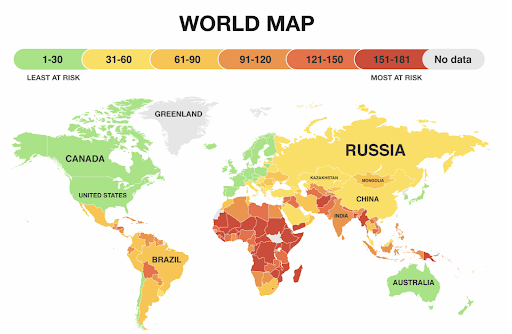
Climate change is not shared equally. The countries and people who have contributed the least to greenhouse gas emissions are often the ones hit the hardest by its consequences.
Several low-emitting nations have appeared on the International Rescue Committee's Watchlist for the countries most likely to experience a humanitarian crisis in recent years.
These nations face compounding challenges — climate shocks layered on top of political instability and economic crisis, which only deepen existing vulnerabilities. Chad, considered the most climate-vulnerable country in the world, battles floods, economic hardship, and growing conflict that all undermine its ability to build climate resilience.
In Somalia, roughly eight million people — nearly half the country's population — face extreme food insecurity as climate change worsens recurring droughts. Afghanistan is grappling with economic collapse, poverty, and food production disrupted by both drought and flooding.
What can we do to tackle global warming?
The "Come Together" section covered who needs to act. This one is about how. Pick a perspective to see concrete steps.
What businesses can do
Because a small number of companies drive the bulk of fossil fuel production, corporate decisions can reshape the entire economy. The biggest wins come from cleaning up operations and supply chains — not just rhetoric.
- Measure and report emissions across the full supply chain — what gets measured gets managed
- Set science-based reduction targets with a clear, time-bound path to net zero
- Shift operations and sourcing toward low-carbon suppliers and materials
- Fund on-site efficiency and renewable energy, and electrify fleets and logistics
- Design products to last, repair, and be recycled — cutting waste across the lifecycle
- Use your platform and lobbying power to back climate-conscious policy
of most companies' emissions come from their supply chain (Scope 3), not their direct operations — so sourcing decisions matter enormously.
The dynamics between politics & climate change
The link between climate change and political stability has long been debated — but the evidence is now hard to ignore. Warmer temperatures and extreme weather intensify social stress and economic disruption, which in turn shapes political behavior.
Global warming and climate change will have detrimental ripple effects on society's "political, economic and demographic structures. These include a rise in ethnic tensions in the Indian Sub-Continent, massive immigration to Europe, regional economic collapse and political destabilization in Africa, the inundation of island nations, and economic losses in the Americas, among many other changes which will combine to destabilize humanity for generations."
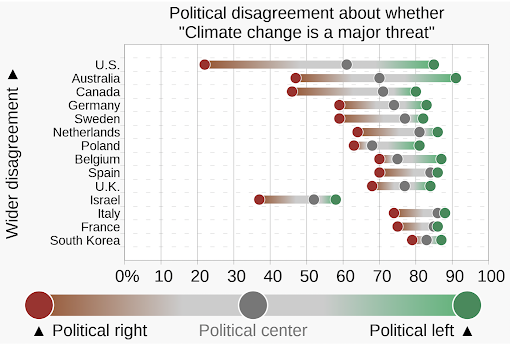
In several major democracies — the United States, Canada, Australia, and, to a lesser extent, the United Kingdom — public opinion remains sharply divided. But the split in this context runs deeper than party politics; it is rooted in contrasting worldviews, from egalitarianism to radical individualism.
Views on climate change tend to track political affiliation closely. A study by the Pew Research Center found that 72% of Democrats and Democratic-leaning Americans acknowledge human activity as a driving force behind climate change, compared with only 22% of Republicans and Republican-leaning voters.
Despite these divisions, international cooperation has delivered landmark agreements — most notably the 2015 Paris Agreement. The European Union has emerged as an environmental leader, and its influence has grown as it shifts toward more sustainable growth models. Other major economies — Russia, Brazil, Indonesia, and India — play varying roles, shaped by their vast natural resources and expanding ecological footprints.
Key milestones in climate diplomacy
- 1992The UN Framework Convention on Climate Change is signed at the Rio Earth Summit, the first global treaty to stabilize greenhouse gases.
- 1997The Kyoto Protocol becomes the first binding international agreement to cut emissions, though it covers only developed nations.
- 2015The Paris Agreement unites nearly every country behind a goal to limit warming to well below 2 °C, and ideally 1.5 °C.
- 2021The Glasgow Climate Pact for the first time explicitly calls on countries to phase down coal and fossil-fuel subsidies.
The world has agreed to limit warming to 1.5 °C above pre-industrial levels — the threshold beyond which scientists warn of irreversible and cascading damage. Current pledges put us on track for roughly 2.5 °C, which is why political pressure and policy follow-through matter as much as the agreements themselves.


Reliable, science-based information
For a deeper dive, the sources below are widely trusted by scientists and policymakers — the same research that powers everything on this site.
- Intergovernmental Panel on Climate Change (IPCC)The UN body that assesses the science of climate change — the source of the reports policymakers around the world rely on.
- NASA ClimatePeer-reviewed data and visuals on Earth's changing climate from one of the world's leading space agencies.
- NOAA Climate.govPlain-language climate science and data from the U.S. National Oceanic and Atmospheric Administration.
- Our World in DataInteractive, evidence-based charts on every aspect of the climate crisis, from emissions to temperature.
- The Global Carbon ProjectAnnual, peer-reviewed accounting of global CO₂ emissions, sinks, and the overall carbon budget.
- Environmental Protection Agency (EPA)U.S. government data and analysis on the sources of greenhouse gas emissions and their impact.
- UN Framework Convention on Climate Change (UNFCCC)The UN framework governing global climate negotiations, including the Paris Agreement and its meetings.
- World Meteorological Organization (WMO)Periodic updates from the WMO on atmospheric concentrations of greenhouse gases.
- Carbon Sequestration Leadership Forum (CSLF)A government-led network advancing carbon capture, utilization, and storage technology and policy.
- America's Climate ChoicesA landmark National Academy of Sciences study laying out the options for addressing climate change in the United States.